
By: The Trek News Desk
Australia is days away from rolling out one of the world’s toughest social-media restrictions for minors, and Snapchat has become the first major platform to begin nationwide age checks for young users. Starting 10 December, children under 16 will effectively be barred from joining most social media services unless they can prove their age.
A First-of-Its-Kind Law, With Heavy Penalties
Under the new federal law, platforms that fail to comply could face penalties of up to 49.5 million AUD (roughly ₹215 crore). The restriction will apply across nearly every major social platform, including Snapchat, YouTube, X, Facebook, Instagram, TikTok, Reddit, Twitch, and Kick.
Snapchat Rolls Out Two Age-Verification Options
To meet government requirements, Snapchat has introduced two verification pathways:
1. ConnectID (Bank-Backed System)
- Powered by Australian banks
- Sends only a “16+ / not 16+” age signal
- No sensitive identity documents required
- Built with privacy-first safeguards
ConnectID managing director Andrew Black said the goal is to protect young users “without compromising their privacy.”
2. k-ID (Singapore-based Verification Platform)
- Allows users to upload a government ID or a photo
- Uses facial analysis to estimate age if documents aren’t provided
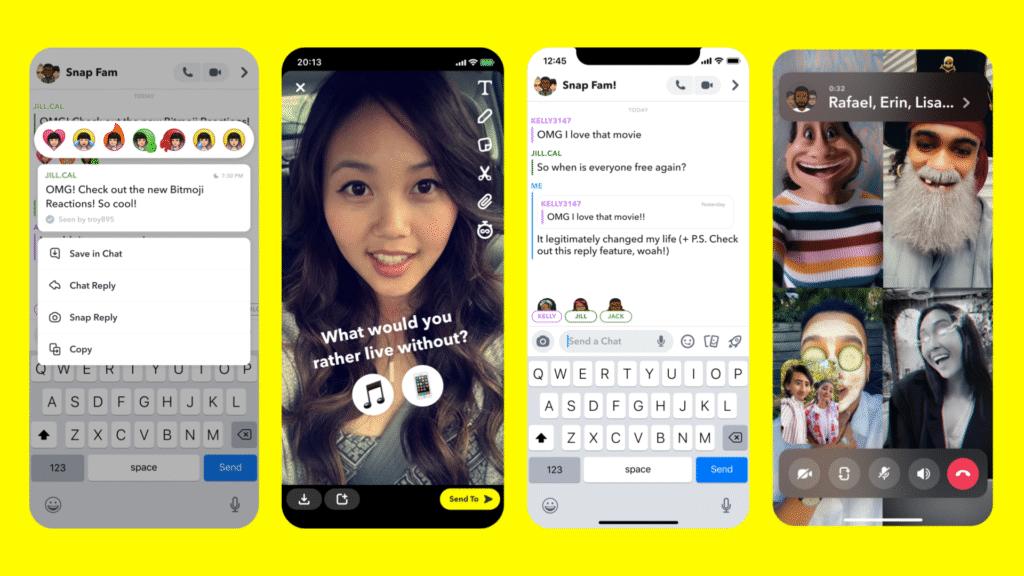
Snapchat Pushes Back: ‘We’re Not a Social Media Platform’
Snapchat says about 440,000 of its Australian users are between 13 and 15.
The company argues the government’s approach could disconnect teens from safe communication channels.
“Cutting teenagers off from their friends and families won’t protect them; it risks pushing them toward unsafe apps,” the company said, reaffirming its stance that it operates primarily as a messaging service, not a social media platform.
Platforms Temporarily Exempted
Some apps have been granted initial exemptions, including:
- Discord
- Lego Play
Officials noted the list may change as the policy evolves.
Growing Concerns Among Youth and Safety Experts
Young reporters and digital-safety experts warn that the crackdown could create unintended harm.
Eighteen-year-old journalist Leo Puglisi cautioned that restricting teens’ access to online spaces could limit their access to crucial information.
UNICEF Australia echoed the concern, “Bans don’t solve the underlying issues. The real solution lies in making platforms safer.”
Advice for Families: Strengthen Offline Connections
Child-protection organisation Act for Kids urged families to prepare early. CEO Katrina Lines advised parents to have open conversations about how children will stay connected once social media access changes.
A recent survey by the organisation found:
- 41% of children prefer in-person time with family
- Only 15% prioritise online interactions
Lines suggested starting simple, “Ask children how they’d like to stay connected without social media; that alone can open the right conversations.”
Global Ripple Effect: Many Nations Study Australia’s Model
Australia’s bold move is shaping global policy discussions. Several countries are now crafting their own frameworks:
- Malaysia: Preparing to ban social media for under-16 users next year
- New Zealand: Working on a new restrictive bill
- Indonesia: Drafting a child-safety protection law
- Europe: France, Spain, Italy, Denmark, and Greece are jointly testing age-verification systems
- Netherlands: Advising parents to block TikTok and Snapchat for children under 15
As the world watches closely, the central question remains: Will Australia’s model genuinely make young people safer, or create new challenges in the digital world?
Source: News Agencies