

By: The Trek News Desk
India has scripted yet another milestone in its space journey. On Sunday, November 2, 2025, the Indian Space Research Organisation (ISRO) successfully launched and placed into orbit its heaviest-ever communication satellite, CMS-03, using its most powerful rocket, the LVM3-M5, also known as ‘Bahubali’ for its remarkable lifting capacity.
A Perfect Launch from Indian Soil
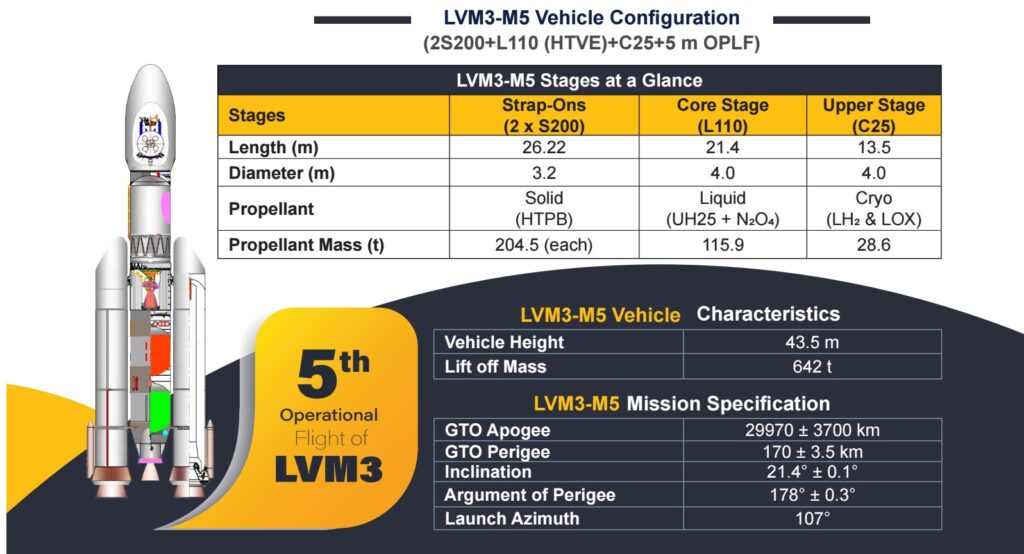
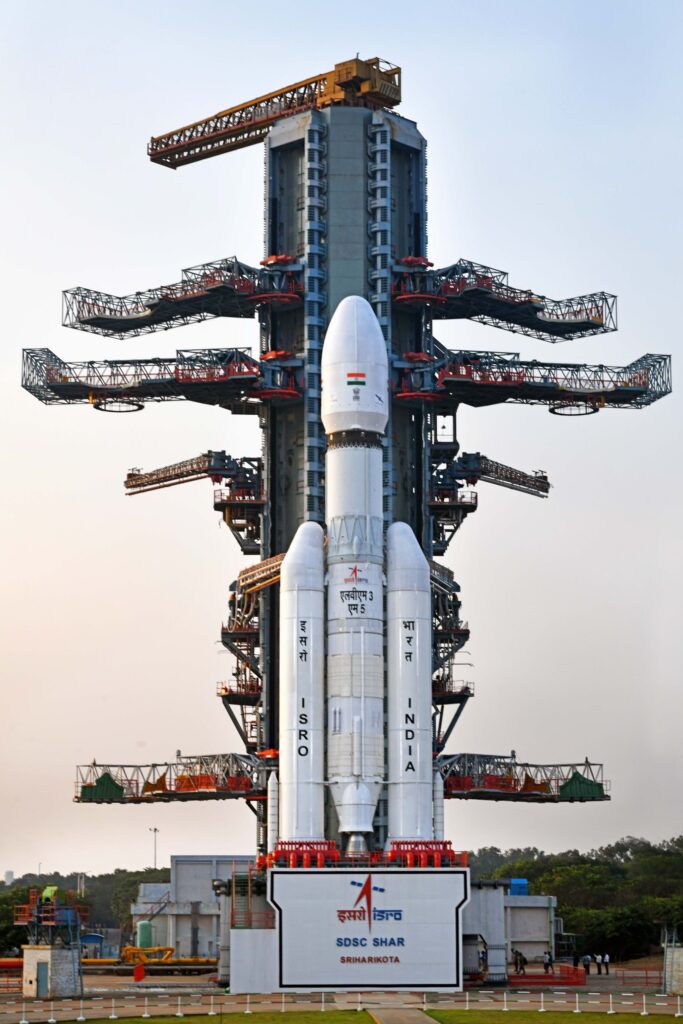
The majestic LVM3-M5 rocket lifted off from the Satish Dhawan Space Centre in Sriharikota at 5:26 PM, soaring 43.5 meters into the evening sky.
A Triumph of Indigenous Capability
For the first time in its history, ISRO has launched such a heavy-class communication satellite using a fully homegrown rocket.
Until now, satellites weighing above 4,000 kg were launched using Arianespace’s Ariane-5 rockets from French Guiana. ISRO’s GSAT-11, weighing 5,854 kg, was launched in 2018 through a foreign mission.
With CMS-03, India has officially ended its dependence on foreign launch providers, marking a major stride toward space autonomy.
CMS-03: Boosting India’s Communication Network
The CMS-03 satellite is an advanced multi-band communication system designed to enhance connectivity across the Indian mainland and surrounding oceanic regions.
While reports suggest potential strategic and surveillance applications, ISRO has not made any official statement regarding such uses.
According to the agency, the satellite will strengthen India’s digital communication infrastructure and expand its high-bandwidth coverage.
Inside the ‘Bahubali’ – ISRO’s Most Powerful Rocket Yet
The LVM3-M5, also known as GSLV Mk III, is ISRO’s most powerful operational launch vehicle. It operates in three stages:
- S200 solid boosters provide the massive initial thrust required for liftoff.
- The L110 liquid stage is powered by two indigenous Vikas engines.
- The C25 cryogenic stage propels the satellite into higher orbits with precision and efficiency.
The rocket can carry payloads of up to 4,000 kg to GTO and 8,000 kg to Low Earth Orbit (LEO), showcasing India’s growing technological prowess in heavy-lift launches.
Another Proud Chapter After Chandrayaan-3
The CMS-03 mission marks the fifth operational flight of the LVM3 rocket. Notably, the same launch vehicle successfully carried Chandrayaan-3 in 2023, when India became the first country to achieve a soft landing near the Moon’s South Pole.
With the success of CMS-03, ISRO has once again reinforced its global reputation as a leader in cost-effective, reliable, and indigenous space technology.
Source: ISRO