

By: Kushagra Sharma
“All women ought together to let flowers fall upon the tomb of Aphra Behn, for it was she who earned them the rights to speak their minds.” – Virginia Woolf, A Room of One’s Own
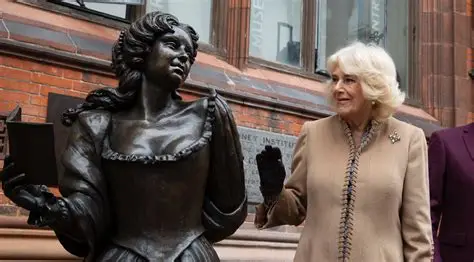
In 1640, in a small English town called Canterbury, a girl was born who would become a literary force to be reckoned with. Her name? Aphra Behn. But despite her incredible achievements, Behn remains one of the most overlooked figures in the history of literature. Yet, her influence on women’s rights and the literary world is undeniable.
A Woman Ahead of Her Time
Behn’s life reads like a thrilling novel of adventure, adversity, and defiance. Growing up in a time when women’s voices were barely heard, Behn not only secured her education through self-teaching, but she also defied societal expectations by making a career as a writer at a time when few women dared to.
Her journey, however, was far from easy. Before becoming famous for her plays, Behn worked as a spy for the English crown. At just 25, she was sent on a mission that would change the course of her life. The task? To turn William Scotta, a double agent, but he betrayed her. Trapped in a foreign land with no money and no way out, Behn turned to the crown for repayment, but they refused her request. Unable to pay off her debts, she was left to fight for her survival in an unforgiving world.
From Spy to Playwright: Writing to Survive
To climb out of her financial hole, Behn began writing plays. In the 1670s, playwrights were not necessarily respected as serious professionals but as entertainers. Behn wasn’t discouraged by this. Her first play, The Forc’d Marriage (1670), was a romantic tragicomedy about an arranged marriage. It was staged by the Duke’s Company, where it ran for six nights, a solid performance for an unknown playwright.
But Behn wasn’t just writing for the sake of it; she was writing for survival. And more importantly, she was writing as a woman in a world that didn’t often recognise women as intellectuals. Throughout her career, Behn faced vicious attacks from critics who couldn’t believe a woman could be so bold, so outspoken, and so talented. Critics even accused her of being a prostitute because of her willingness to sell her thoughts and ideas. But Behn was unflinching.
The First Female Playwright to Stand Proudly in the Spotlight
In 1673, Behn’s The Dutch Lover was staged at the Dorset Garden Theatre. It was immediately met with a harsh backlash, but Behn took the high road. In her Epistle to the Reader, she responded with fierce resolve, arguing that it wasn’t a lack of talent but rather women’s exclusion from education that had historically held them back. She believed in her ability to write, and she made sure the world knew it.
By the 1670s, Behn was one of England’s most prominent playwrights. Her works, filled with themes of gender, sexuality, and power dynamics, challenged the norms of her time. She didn’t shy away from controversial topics. Her poems often reflected her defiance of the political establishment, particularly attacking the Whigs and their hypocrisy. She also wasn’t afraid to criticise the royal family, even once earning a warrant for her arrest after criticising James Scott, Duke of Monmouth.
A Life of Struggle, But a Legacy of Courage
Despite being one of the most respected playwrights of her era, Behn’s later years were marked by poverty, failing health, and increasing debt. Yet, even as her health deteriorated, she continued to write. Writing was her life force. Even when it became physically difficult for her to hold a pen, Behn’s will to write remained unbroken.
When she died in 1689, she left behind a legacy that would be largely forgotten for centuries. Her tombstone inscription reads:
“Here lies a proof that wit can never be defended against mortality.”
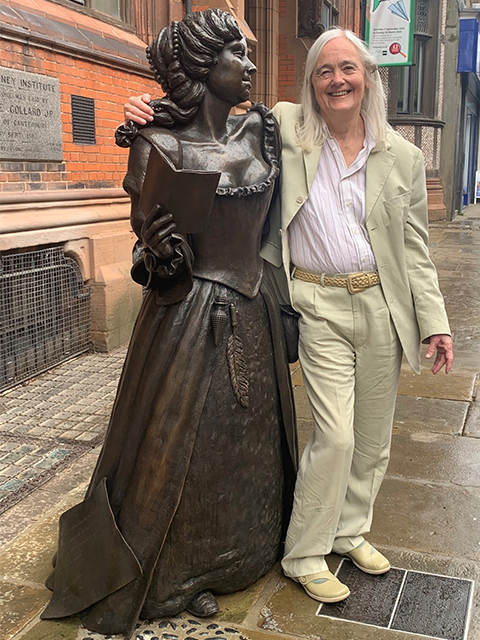
But as Virginia Woolf once famously said, all women should honour Behn’s memory because it was she who laid the groundwork for the women who would come after her. It was Aphra Behn who carved out space for women to have a voice in literature, in politics, and in life.
Why Behn Still Matters Today
Aphra Behn’s life and work were revolutionary. She not only paved the way for women writers but also challenged the societal norms that sought to silence women’s voices. She wrote with boldness, with intelligence, and with a fierce commitment to speaking her mind. It’s high time we recognise her as the pioneering force she was and gave her the place in history she rightfully deserves.
Virginia Woolf was right: we all owe Behn a debt. As Woolf suggested, we should be honouring her legacy and the rights she fought for, rights that enable women to speak their minds and take their place in history.