By: The Trek News Desk
US President Donald Trump has stated that a “framework” for a potential agreement regarding Greenland and the broader Arctic region has been established. His statement comes amid a notable shift in tone, as he has stepped back from earlier threats to impose tariffs on European allies. Both Trump and Nato officials have described recent discussions as “very positive.”
Posting on his social media platform Truth Social, Trump claimed the proposed framework would serve the interests of the United States as well as all Nato member nations. However, he did not provide concrete details, nor did he clarify whether the plan involves American ownership of Greenland. Greenland remains an autonomous territory under the Kingdom of Denmark, and Copenhagen has consistently rejected any proposal involving its sale or transfer.
According to diplomatic sources, there is currently no agreement on US control or ownership of Greenland. Trump said that Secretary of State Marco Rubio and Special Envoy Steve Witkoff would report directly to him as talks continue, signalling sustained high-level engagement.
Denmark’s Foreign Minister Lars Løkke Rasmussen struck a cautiously optimistic note, saying the day had ended “better than it began.” He emphasised that while Denmark is open to addressing US security concerns in the Arctic, its sovereignty over Greenland remains a non-negotiable red line.
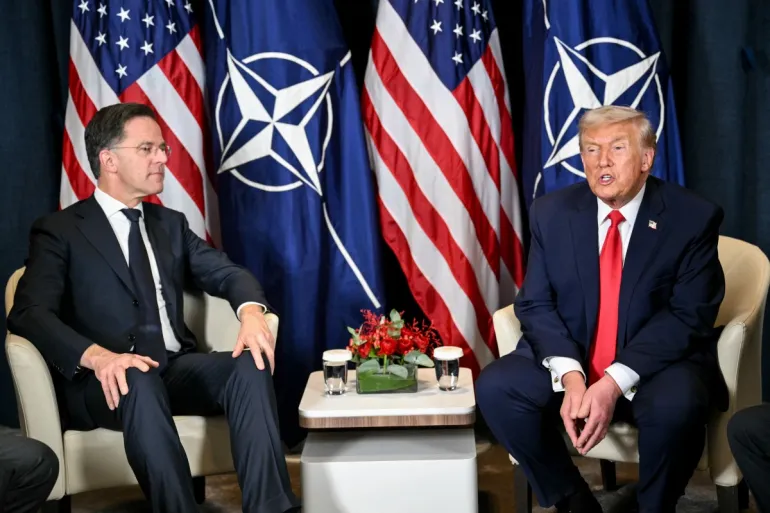
Following his meeting with Nato Secretary General Mark Rutte in Switzerland, Trump suggested that mineral resources could form part of any future deal. Greenland is believed to hold significant reserves of rare earth minerals, which are critical for industries such as mobile technology and electric vehicles. Trump described the idea as a long-term arrangement that could benefit all parties involved.
Rutte, however, clarified that discussions with Trump did not touch upon Denmark’s sovereignty over Greenland. In a separate statement, Nato said future negotiations between Denmark, Greenland and the United States would focus on preventing Russia and China from gaining economic or military influence on the island.
Concerns were raised in Denmark by Greenlandic lawmaker Aaja Chemnitz, who questioned Nato’s role in discussions involving Greenland’s natural resources. She stressed that decisions affecting Greenland should not be made without its direct involvement.
US media reports suggest that the proposed framework could allow for an expanded American military presence in Greenland. Under existing agreements, the US already has the right to deploy troops there and currently maintains more than 100 personnel at the Pituffik Space Base in the island’s northwest.
Trump had earlier warned that failure to reach an agreement over Greenland could lead to tariffs ranging from 10% to 25% on imports from the UK and several European Nato countries. However, after meeting the Nato chief, he announced that the tariffs scheduled to take effect on 1 February would be put on hold.
Speaking at the World Economic Forum in Davos, Trump said the US was seeking immediate negotiations on Greenland but ruled out the use of military force. While he acknowledged the use of diplomatic pressure, he insisted that America would not pursue the territory through coercion.
Trump’s tariff policies have drawn criticism in Europe. French President Emmanuel Macron labelled the prospect of new US import duties as unacceptable. In response, Trump launched sharp verbal attacks on leaders in France and Canada, further underlining strains in transatlantic relations.
Source: News Agencies