
By: The Trek News Desk
Ukrainian President Volodymyr Zelensky is set to meet key European leaders in London on Monday, as Kyiv’s allies confront growing U.S. pressure to consider concessions in ongoing peace negotiations with Russia.
Top European Leaders Gather at Downing Street
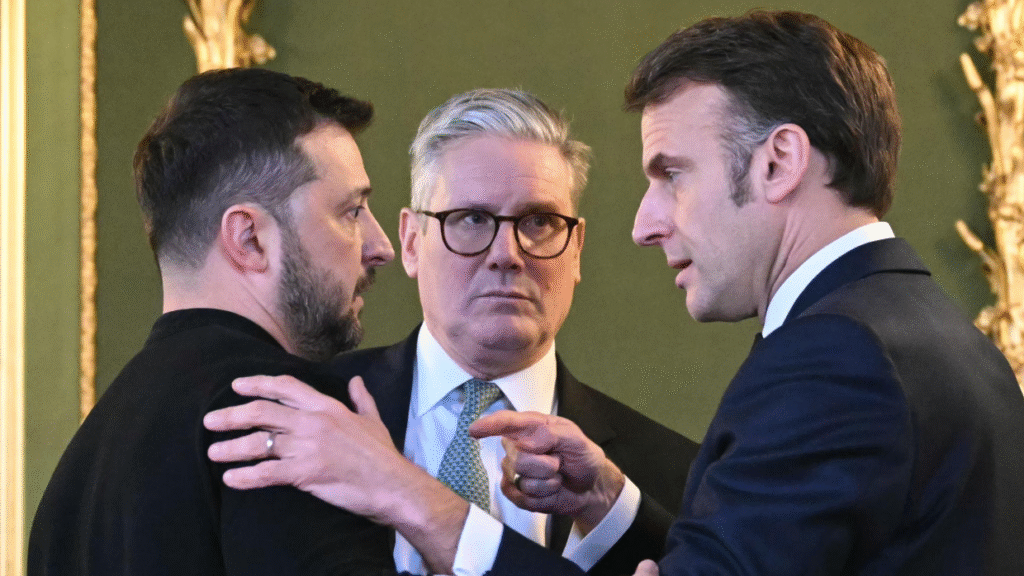
Zelensky will join British Prime Minister Sir Keir Starmer, French President Emmanuel Macron, and German Chancellor Friedrich Merz at No. 10 Downing Street. The meeting comes at a crucial moment, with European governments intent on ensuring that any potential peace deal contains strong safeguards to prevent future Russian aggression.
Debate Over the U.S.-Backed Peace Proposal
The London talks follow three days of negotiations in Florida, where Zelensky’s team reviewed the latest version of a U.S.-drafted peace plan. Critics argue that the proposal leans too heavily toward Moscow’s demands, a perception strengthened when U.S. President Donald Trump publicly criticised Zelensky for “not reading the draft” yet.
Trump remarked, “His people like the plan, Russia seems okay with it, I’m not sure Zelensky is.”
The draft was revised after discussions between Zelensky’s new chief negotiator, Rustem Umerov, and Trump’s inner circle, including special envoy Steve Witkoff and Jared Kushner.
Zelensky responded that he expected an in-person briefing soon, noting that “some matters can only be discussed face-to-face.”
Focus of the London Meeting
Downing Street says the meeting will concentrate on “the state of the peace talks and next steps.”
UK minister Pat McFadden emphasised the need for solid, enforceable security guarantees, saying Ukraine must be able to “determine its own future” without relying on a “toothless” mechanism.
Europe’s Push for a Strong Security Framework
The UK and France have led discussions to form a “coalition of the willing,” also referred to as the Multinational Force Ukraine, a proposed coalition designed to provide long-term defence support. Diplomatic sources say it would not act as a peacekeeping or ceasefire-monitoring force, but rather as a deterrence and reassurance mission on Ukrainian soil.
Germany, Italy, and Poland have supported defence aid but remain reluctant to deploy troops directly inside Ukraine, a move Russia has warned it would view as an escalation.
Territory and Nuclear Security at the Heart of Disputes
The U.S. continues to push for a rapid agreement, though major obstacles remain.
One controversial point involves Washington’s suggestion that Ukraine withdraw its forces from certain eastern regions that Russia has attempted but failed to fully capture. In return, Russia would pull back from other occupied zones and halt hostilities.
Another complex issue is the Zaporizhzhia nuclear power plant. Negotiators say dividing its future energy output between Kyiv and Moscow is among the most disputed components of the plan.
Russia’s Position Remains Unyielding
Despite economic strain and battlefield losses, Moscow has shown little willingness to soften its demands. President Vladimir Putin insists Russia will continue fighting until it fully seizes the Donetsk and Luhansk regions.
The Kremlin also reacted positively to the White House’s updated National Security Strategy, which calls for improving Europe-Russia relations to avoid wider conflict, a stance Russian officials called “encouraging.”
A Critical Moment for Europe’s Role
Monday’s talks mark Europe’s latest attempt to shape the direction of peace efforts that have so far been dominated by the United States. European leaders have consistently pushed back against early U.S. drafts, arguing they jeopardise Europe’s long-term security for the sake of a quick settlement.
As negotiations grow increasingly complex, the London meeting represents a pivotal attempt to align Western strategy and protect Ukraine’s sovereignty while navigating mounting geopolitical pressure.
The path ahead remains uncertain, but today’s discussions could help determine Ukraine’s political and security landscape for years to come.
Source: News Agencies