
By: The Trek News Desk
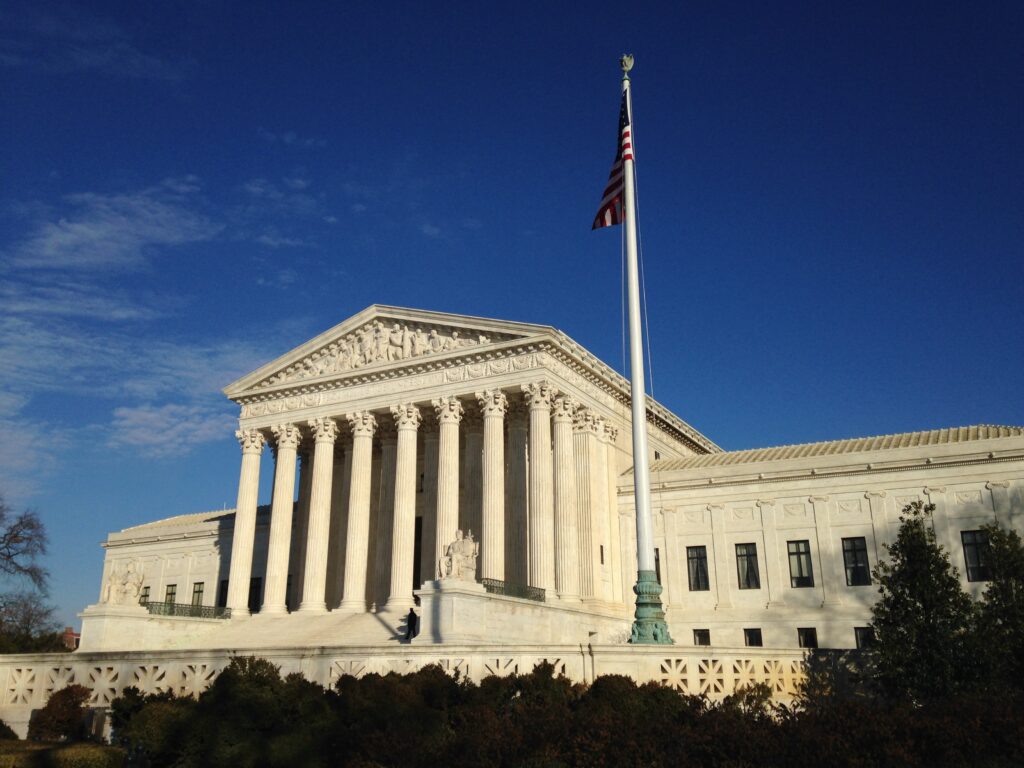
In a major development, the US Supreme Court has agreed to review a historic case that could redefine whether certain children born on American soil are automatically entitled to citizenship under the Constitution.
From Executive Order to the Supreme Court
On his first day back in office, President Donald Trump signed an executive order aimed at ending birthright citizenship for children born to undocumented immigrants or those residing in the country on temporary visas.
Multiple federal courts blocked the order, calling it unconstitutional, paving the way for a legal battle that has now reached the nation’s highest court. A date for the Supreme Court hearing has not yet been set.
14th Amendment Back in Spotlight After 160 Years
Ratified in 1868, the 14th Amendment states that “all persons born or naturalised in the United States, and subject to the jurisdiction thereof, are citizens of the United States.”
Aside from children born to diplomats or foreign military personnel, this principle has guided US citizenship policy for more than a century and a half.
However, the Trump administration argues that the amendment was never intended to cover children whose parents are not legally or permanently present in the United States. Officials contend that the phrase “subject to the jurisdiction thereof” has been widely misinterpreted.
ACLU Responds: ‘A President Cannot Rewrite the Constitution’
The ACLU(American Civil Liberties Union), representing the plaintiffs in the case, maintains that the executive order is an attempt to override a constitutional guarantee that has stood for generations.
Cecillia Wang, the organisation’s legal director, emphasised that for over 150 years, “every child born on American soil has been recognised as a citizen.” She argued that no president has the authority to alter the Constitution’s core principles through executive action.
Potential Impact: A Redefinition of Citizenship
Experts warn that the Court’s eventual ruling could influence not only the future of US immigration policy but also reshape the very definition of American citizenship.
Research indicates that eliminating birthright citizenship could significantly expand the undocumented population by 2.7 million by 2045 and 5.4 million by 2075.
Who Could Be Affected?
– In 2016, around 250,000 babies were born to parents living in the country without legal status.
– By 2022, the number of US-born citizens with undocumented parents had reached 1.2 million, according to the Pew Research Centre.
What Happens Next
Last June, the Supreme Court ruled that lower courts had exceeded their authority by issuing broad injunctions blocking Trump’s directive, though the Court did not weigh in on the citizenship question itself.
Now, as the case moves forward, the nation awaits a verdict that could fundamentally alter America’s long-standing understanding of birthright citizenship.
The Supreme Court’s forthcoming decision is expected to shape the legal and political landscape for years to come.
Source: News Agencies