
By: The Trek News Desk
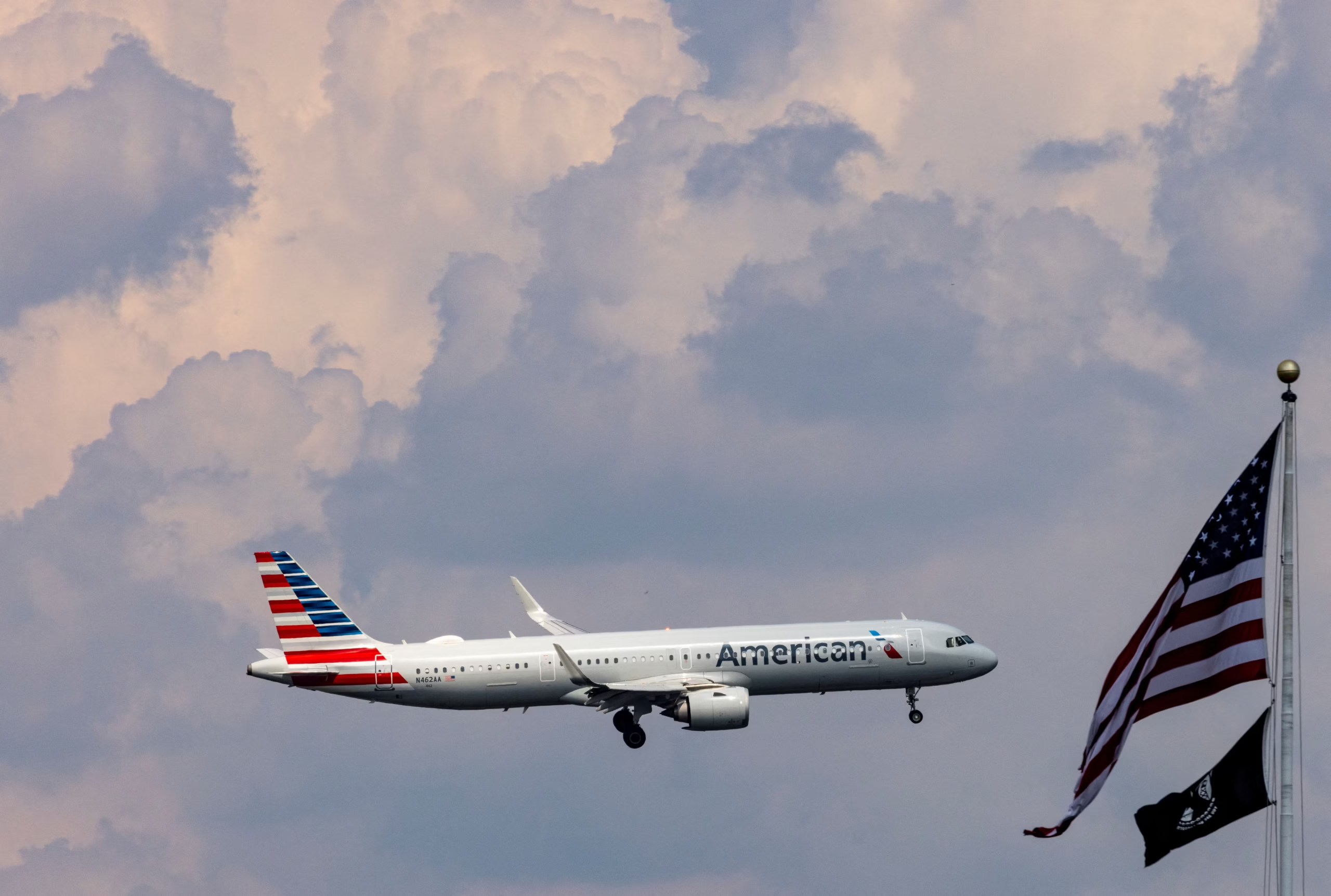
The United States is witnessing one of the worst travel disruptions in recent history as the ongoing government shutdown continues to paralyse air travel operations nationwide. The shutdown, which has now entered its 35th consecutive day, has severely affected air traffic control services, leading to widespread flight delays and cancellations at major airports across the country.
Air traffic controllers (ATCs), who have been working without pay since October 1, are under extreme psychological and financial pressure. Their increasing absences have forced the Federal Aviation Administration (FAA) to reduce the number of flights in the air at any given time to maintain safety standards.
According to FlightAware, a U.S.-based flight tracking service, more than 16,700 flights were delayed and 2,282 flights were cancelled between Friday and Sunday last week. The trend continued into Monday evening, with over 4,000 delays and 600 cancellations reported at major airports, including Chicago O’Hare, Dallas Fort Worth, Denver, and Newark.
FAA Expresses Concern Over Rising Absences
The FAA has confirmed that nearly half of its “Core 30” facilities, which are America’s busiest air traffic hubs, are facing serious staffing shortages. In some regions, such as New York City’s air traffic control centres, absences have reached as high as 80 per cent.
In a statement, the FAA said: “Half of our major air traffic facilities are operating with reduced staffing due to the ongoing shutdown. To preserve safety, we have slowed the flow of air traffic, which may cause significant delays and cancellations.”
The agency added that maintaining operational safety is its top priority, even if it means grounding or delaying flights. FAA officials emphasised that safety protocols will not be compromised, but the shortage of staff is making it increasingly difficult to manage air traffic efficiently.
Air Traffic Controllers Under Mounting Pressure
There are approximately 13,000 air traffic controllers across the U.S., and they are classified as “essential workers”, meaning they are required to work during the shutdown without pay. This prolonged period without income has placed enormous strain on them and their families.
Many controllers are reportedly taking up second jobs to meet their daily needs, which in turn has led to even more absences and stress within the system.
U.S. Secretary of Transportation Sean Duffy, speaking to the media, said the administration understands the situation controllers are in and will not penalise them for finding ways to support their families.
“When workers are forced to choose between putting food on the table and coming to work unpaid, I can’t fire them for that,” Duffy said.
“We’ll continue to slow down traffic and cancel flights if needed, but safety will not be compromised.”
Wider Impact on Federal Employees
The effects of this record-breaking shutdown go well beyond the aviation sector. According to the Bipartisan Policy Centre, around 670,000 federal employees have been furloughed, while another 730,000 are working without pay.
The current shutdown has now tied with the 2018–2019 government shutdown, making it the longest in U.S. history. The situation has created economic hardships for countless federal workers, forcing many to depend on savings, community aid, or secondary jobs to survive.
Travel Chaos Likely to Continue
As the shutdown drags on, its impact on air travel is expected to worsen. Aviation experts warn that prolonged staffing shortages could further disrupt flight schedules and potentially create ripple effects across international routes as well.
Travellers are being urged to check their flight status frequently, anticipate delays, and prepare for last-minute cancellations.
Officials from the FAA and the Department of Transportation have called for an immediate resolution to the shutdown, stressing that restoring pay for air traffic controllers and other essential workers is vital to stabilising the nation’s air traffic system.
Source: News Agencies