

By: The Trek News Desk
At least 14 people have been confirmed dead, and several others remain missing after heavy rainfall triggered devastating landslides in the Darjeeling and Kalimpong districts of West Bengal on the night of October 4. The impact of the landslides has severely disrupted local infrastructure, with multiple bridges damaged and roads blocked, leading to significant challenges in rescue operations.
Rescue teams, including the National Disaster Response Force (NDRF) and local police, have been working tirelessly, but bad weather and widespread destruction have hampered their efforts. Authorities are concerned that the number of casualties may rise as the search continues.
Key Areas Affected: Darjeeling, Kalimpong, and Sikkim
The disaster has had widespread effects in the region. Authorities confirmed the collapse of a vital iron bridge near Teesta Bazaar in Kalimpong, which has cut off access to Sikkim. The Teesta River’s water levels surged, further complicating rescue operations and isolating large parts of the affected area.
In Darjeeling, rescue teams have retrieved seven bodies so far, including four from Dhar Gaon in Mechi, two from Sarsaly, and one from Mirik Lake. However, two individuals remain unaccounted for, and efforts are underway to locate them.
Additional Superintendent of Police (ASP) Abhishek Roy, in his statement, confirmed that multiple roads in the affected areas have been blocked due to landslides. Key routes, such as the road from Darjeeling to Siliguri via Dilaram, as well as the Rohini Road and the Pankahabri road, are either partially or completely closed.
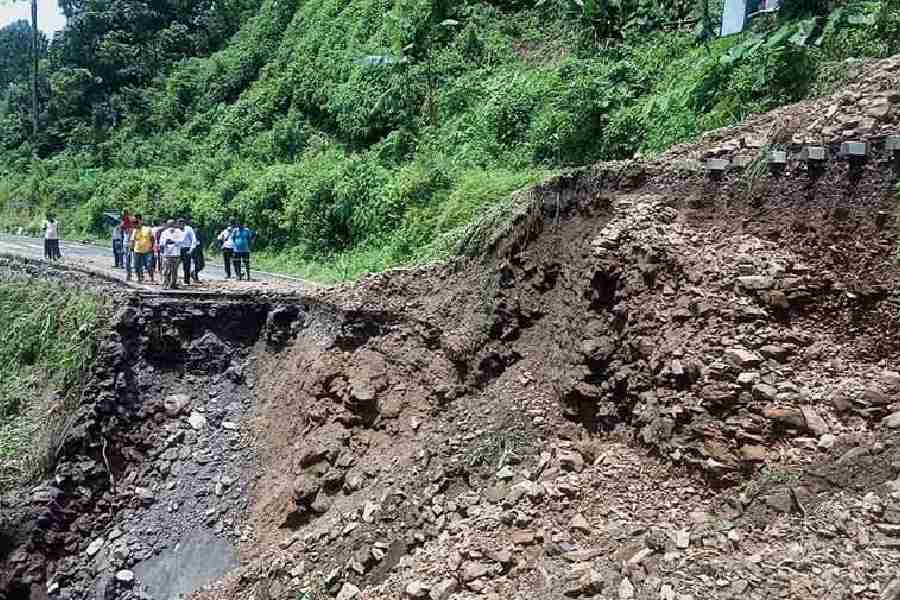
“Efforts are being made to evacuate stranded tourists, particularly from the Mirik sub-division, through the Tindharia road. We are hopeful to clear the roads for evacuation in the next 3-4 hours,” said ASP Roy.
Transport and Infrastructure Crisis: Communication Cut Off
The collapse of critical infrastructure has left the region in turmoil. With the destruction of bridges between Mirik and Dudhia, and the failure of another bridge that connects Kalimpong to the rest of the state, the affected areas are left isolated. The rising water levels of the Teesta River have added to the crisis, severely affecting travel between West Bengal and Sikkim.
National Highways 10 and 717A, which serve as the region’s main arterial routes, have been blocked due to multiple landslides. The key road connecting Darjeeling to Siliguri is blocked at Dilaram, and the Rohini Road is completely closed, leaving travelers stranded. Meanwhile, the Tindharia road remains the only operational route for limited evacuations.
Local authorities have issued an immediate closure of all major tourist attractions, including Tiger Hill and Rock Garden, as a precautionary measure.
Rescue Operations and Travel Advisory
Rescue operations have primarily focused on evacuating stranded tourists, especially those in the popular hill station of Mirik. The Gorkhaland Territorial Administration (GTA) has also issued an advisory asking all tourists to stay alert and refrain from unnecessary travel until the situation improves.
“We urge all travelers to stay updated with official sources and avoid unnecessary journeys. Our teams are working around the clock to clear the roads and restore normalcy,” said Raju Bista, MP of Darjeeling. He has also coordinated with local authorities and party workers to mobilize resources for the affected people.
The Darjeeling Police Control Room has set up a hotline for stranded tourists to call for assistance: +91 91478 89078.
Prime Minister Expresses Condolences
Prime Minister Narendra Modi has expressed his deep sorrow over the tragic loss of lives and has assured all necessary help for the affected people. He posted on X (formerly Twitter), stating, “Deeply pained by the loss of lives due to a bridge mishap in Darjeeling. Condolences to those who have lost their loved ones. May the injured recover soon. The situation in Darjeeling and the surrounding areas is being closely monitored in the wake of heavy rains and landslides. We are committed to providing all possible assistance to those affected.”
Looking Ahead: Immediate Response and Long-term Recovery
While the immediate focus is on rescue operations, authorities are preparing for long-term recovery efforts. As the weather improves, there will likely be further challenges related to rebuilding the damaged infrastructure and restoring vital communication lines between West Bengal and Sikkim.
Local officials have assured the public that every effort is being made to ensure that those affected receive all necessary aid and support in this difficult time.
Source: News Agencies

Hi,
I just visited thetreknews.com and wondered if you’ve ever considered an impactful video to advertise your business? Our videos can generate impressive results on both your website and across social media.
Our videos cost just $195 (USD) for a 30 second video ($239 for 60 seconds) and include a full script, voice-over and video.
I can show you some previous videos we’ve done if you want me to send some over. Let me know if you’re interested in seeing samples of our previous work.
Regards,
Joanna
Unsubscribe: https://unsubscribe.video/unsubscribe.php?d=thetreknews.com