By: The Trek News Desk
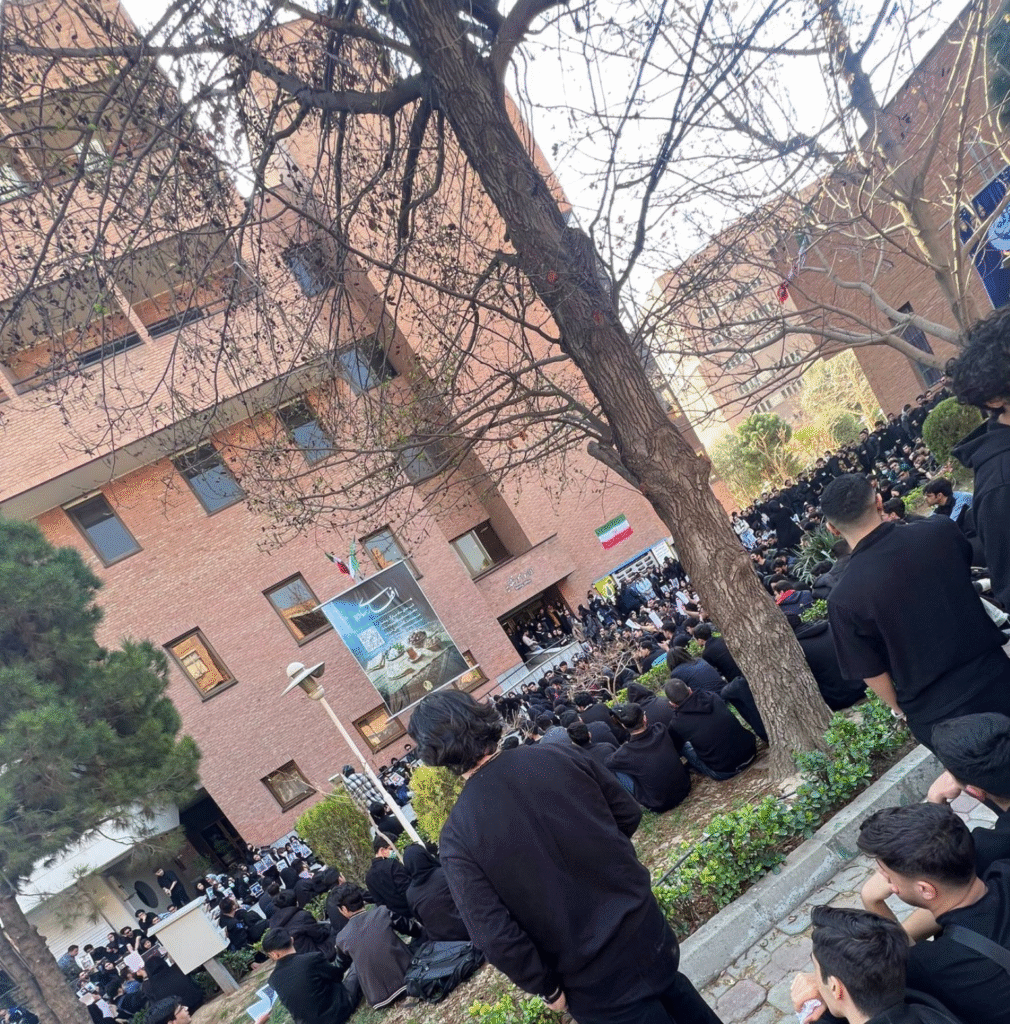
Iran witnessed its first large-scale student-led demonstrations since last month’s deadly crackdown, as university campuses across the country turned into centres of anti-government protests. Students in the capital, Tehran, and other major cities organised marches, sit-ins, and rallies to voice their dissent.
At the Sharif University of Technology, hundreds of students gathered on Saturday at the start of the new academic term. Waving national flags, they marched peacefully through the campus while chanting slogans such as “Death to the dictator,” directed at Iran’s Supreme Leader Ali Khamenei. Pro-government supporters were also present nearby, leading to brief scuffles between the two groups.
A peaceful sit-in was also held at Shahid Beheshti University. Meanwhile, videos circulating from Amirkabir University of Technology showed students raising anti-government slogans. In the northeastern city of Mashhad, students reportedly chanted “Freedom” and called on their peers to stand up for their rights.
Many of the demonstrators said they were honouring thousands who lost their lives during the widespread protests in January. According to the US-based rights group Human Rights Activists News Agency (HRANA), at least 6,159 deaths were confirmed during that wave of unrest, most of them protesters. The group added that investigations into thousands of additional reported fatalities are ongoing.
However, Iranian authorities have presented a lower figure, claiming that around 3,100 people were killed, many of whom were security personnel or civilians.
The protests come amid heightened tensions between Iran and the United States. Washington and its European allies suspect Tehran of advancing toward nuclear weapons capability, allegations Iran has consistently denied.
Talks between US and Iranian officials were recently held in Switzerland, with both sides indicating some progress regarding limitations on Iran’s nuclear program. Despite this, US President Donald Trump has warned that a limited military strike remains under consideration if a deal fails to materialise. The United States has also increased its military presence in the region.
Iran’s exiled opposition remains split. Some groups are openly urging US intervention, hoping it would accelerate the fall of the current government. Others, however, oppose any foreign involvement, arguing that internal reform should come without outside interference. Both sides are actively promoting their narratives on social media platforms.
It remains unclear whether any students have been detained following Saturday’s protests. Nonetheless, the renewed campus demonstrations signal that public discontent in Iran continues to simmer, raising concerns about further instability in the coming days.
Source: News Agencies