By: The Trek News desk
The European Union has approved a landmark agreement to completely halt imports of Russian natural gas and liquefied natural gas (LNG) by 2027. The move marks one of the bloc’s most decisive steps to cut off Moscow’s energy revenues and weaken its ability to finance the war in Ukraine. However, Hungary and Slovakia have signalled that they may challenge the law once it is formally adopted.
A Gradual Ban: Final Cut-Off by 2027
Under the deal struck between EU co-legislators:
- Russian LNG will be blocked from 25 April 2026
- Short-term pipeline gas contracts end on 17 June 2026
- Long-term LNG contracts may run until 1 January 2027
- Long-term pipeline gas imports must stop by 30 September 2027, a deadline that could be extended to 1 November 2027 if gas storage levels fall too low
The ultimate target: No Russian gas, LNG or pipeline entering the EU by the end of 2027.
Dependence Sharply Reduced After the Ukraine Invasion
Following Russia’s full-scale invasion of Ukraine in 2022, the EU rapidly diversified its energy supply network.
According to EU data:
- In 2021, 45% of EU gas imports came from Russia
- By early 2025, that share had fallen to 13%
Despite this dramatic drop, Russian gas imports were still worth €10 billion in 2025, with countries like Belgium, France and Spain continuing to receive LNG via transhipments.
Internal Tensions: Supply Security vs. United Front
While most EU capitals supported a sweeping ban, landlocked countries raised alarms about supply security and the risk of higher prices compared to coastal member states that have easier access to LNG terminals.
The European Parliament initially resisted granting exemptions, but compromises were ultimately made to secure consensus.
Denmark’s Climate and Energy Minister Lars Aagaard said, “This agreement demonstrates our commitment to strengthening Europe’s energy security.”
Hungary’s Foreign Minister Péter Szijjártó denounced the law as a “Brussels diktat” and a “fraud,” adding that Hungary and Slovakia were exploring joint legal action.
Emergency Clause: Leeway If Gas Storage Falls Below 90%
To address the concerns of landlocked countries, negotiators added a suspension clause:
- If any member state’s gas reserves fall below 90% by November 1,
- That country may declare a supply emergency,
- Allowing the European Commission to temporarily ease the ban.
EU diplomats note that even during the 2022 energy crisis, no country declared such an emergency, suggesting the ban should remain largely intact.
TurkStream Restrictions, With Limited Exceptions
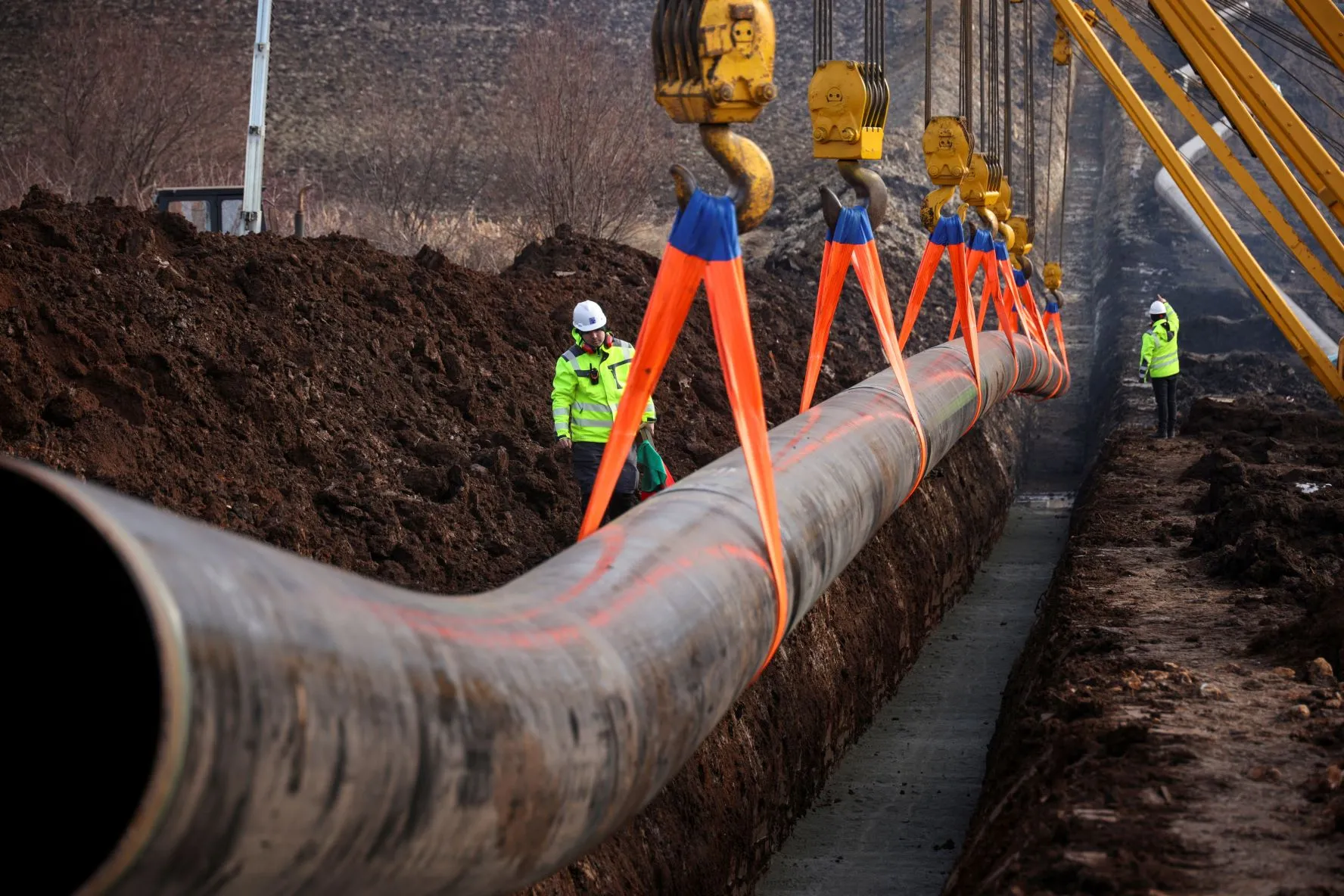
The legislation also covers imports through the TurkStream pipeline, which transports gas to southeastern Europe. Gas originating in Russia or Belarus will be banned; however, if companies prove the fuel was merely transiting through these countries and produced elsewhere, it may still enter the EU.
EU Leadership Declares “End of an Era”
European Commission President Ursula von der Leyen called the agreement a turning point: “This marks the end of Europe’s dependence on Russian energy. We are permanently shutting these imports down and standing firmly with Ukraine.”
Energy Commissioner Dan Jørgensen echoed the sentiment, “We’re never going back to Russian dependence, market manipulation or energy blackmail.”
Thomas Pellerin-Carlin, the Parliament’s lead negotiator, said the law will shield Europe from future “Russian gas shocks” like the one experienced in 2021–2022.
What Happens Next?
EU energy ministers will vote on the final text on 15 December, followed by a plenary vote in the European Parliament the same week.
Source: News Agencies