By: The Trek News Desk
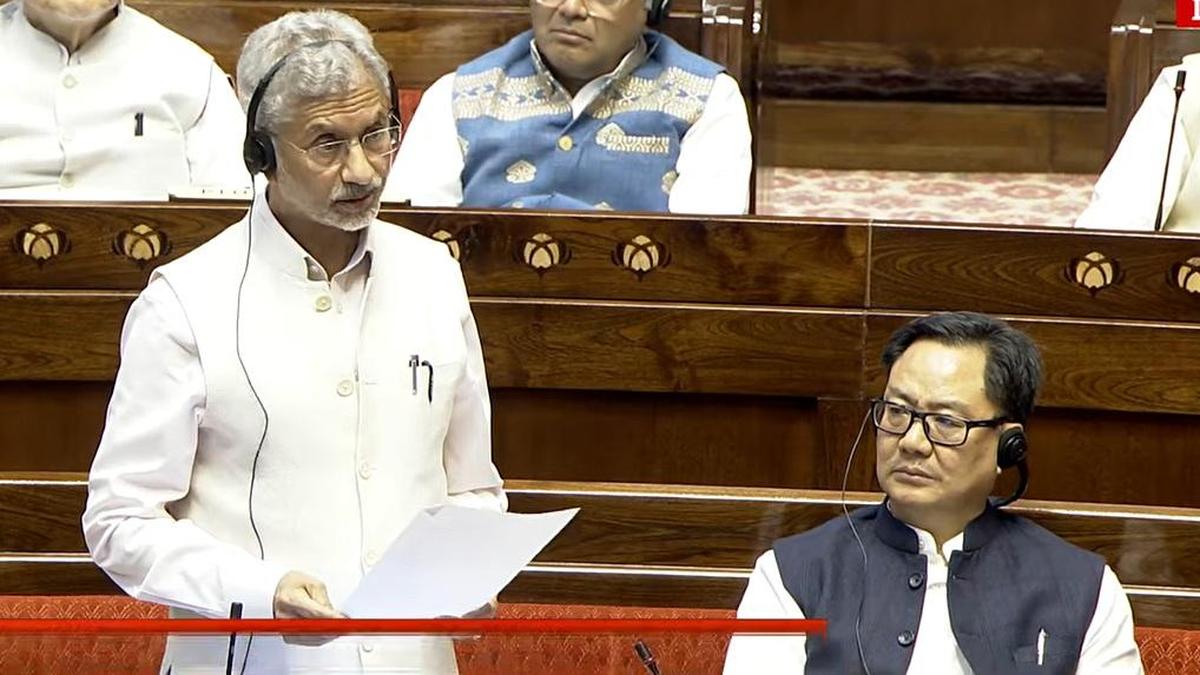
Amid the ongoing conflict in West Asia, India has reiterated its support for peace and diplomatic engagement. External Affairs Minister S. Jaishankar on Monday (March 9, 2026) informed Parliament that India continues to advocate dialogue, restraint, and the protection of civilians in the region.
Addressing both the Lok Sabha and the Rajya Sabha, Jaishankar said the recent developments in West Asia are a matter of serious concern for the international community. He emphasised that disputes in the region should be resolved through dialogue and diplomacy, while also stressing the importance of respecting the sovereignty and territorial integrity of all nations involved.
The minister stated that the safety and well-being of Indian citizens living in the region remain the government’s highest priority. He noted that Prime Minister Narendra Modi is closely monitoring the situation, and the government has been continuously assessing developments since the conflict began. The Cabinet Committee on Security, chaired by the Prime Minister, has also reviewed the regional situation and the challenges faced by Indians in the affected areas.
Jaishankar highlighted that West Asia is strategically important for India, particularly in terms of energy security. The region is a major source of oil and gas supplies, and the Gulf countries collectively represent one of India’s largest trading partners, with annual trade valued at nearly $200 billion.
He also pointed out that recent attacks on merchant vessels have impacted Indian seafarers, with reports of casualties and one Indian mariner still missing.
The Ministry of External Affairs has issued several travel advisories since January, urging Indian citizens to avoid non-essential travel to Iran. Indians already present there have been advised to stay in touch with the Indian embassy and strictly follow safety guidelines.
According to the minister, around one crore Indians live and work across Gulf nations, while several thousand Indian nationals are in Iran for studies and employment. He assured Parliament that the government is making every effort to safely bring back Indians stranded in the region.
Indian diplomatic missions have been actively assisting citizens through relocation and evacuation measures. In some cases, Indian nationals were helped to travel to neighbouring countries such as Armenia before returning to India. So far, about 67,000 Indians have returned from the region with support from the government, which facilitated additional commercial flights and travel arrangements.
To manage the evolving situation, the Ministry of External Affairs has set up a dedicated control room to respond to requests from Indian citizens. Meanwhile, the Directorate General of Shipping has formed a quick-response team to assist Indian seafarers affected by the crisis.
Jaishankar also informed the House that Prime Minister Modi has spoken with several leaders from the region, including those from the United Arab Emirates, Qatar, Saudi Arabia, Kuwait, Bahrain, Oman, Jordan, and Israel. These governments have assured India of the safety and security of the Indian community in their countries.
The minister further revealed that India permitted the Iranian vessel “IRIS Lavan” to dock at Kochi port on March 4 for humanitarian reasons.
Concluding his remarks, Jaishankar said India remains actively engaged through diplomatic channels to safeguard the interests of its citizens and ensure stability in energy supplies during the ongoing crisis.
Source: News Agencies