

By: The Trek News Desk
Each year in the UK, when the summer time period ends, the clocks move back one hour from British Summer Time (BST) to Greenwich Mean Time (GMT). This year, the change happens on the 26th of October, and if your work, communication or travel involves the UK, it’s important to be aware of it. Especially for those in India or anywhere globally who interact with UK-based contacts, remote work, calls, scheduling, and trips are all impacted. Let’s dig in: what this change means, when it takes place, and how exactly it affects India and the rest of the world.
What Exactly Happens?
- BST (British Summer Time) is the UK’s daylight-saving arrangement, where clocks are set one hour ahead to make better use of evening daylight.
- When the daylight-saving period ends, typically in late October, the UK ends BST and the clocks go back one hour, returning to GMT.
- GMT is the UK’s standard time zone, unaffected by daylight saving.
- The practical result: in the UK, the local clock shows a time one hour earlier (relative to BST), meaning evenings get darker sooner, and mornings light up a little earlier.
Why Does the UK Do This?
- The main motivation is to make better use of natural daylight during the longer summer days, thereby reducing reliance on artificial lighting and possibly saving energy.
- During the summer months, having the clock ahead means more daylight in the evening hours when people are active.
- As the seasons shift and evenings turn darker faster, the benefit of keeping the clock ahead diminishes, so the switch back occurs.
- Many European countries adopt similar daylight-saving practices to streamline travel, trade and cross-border time coordination.
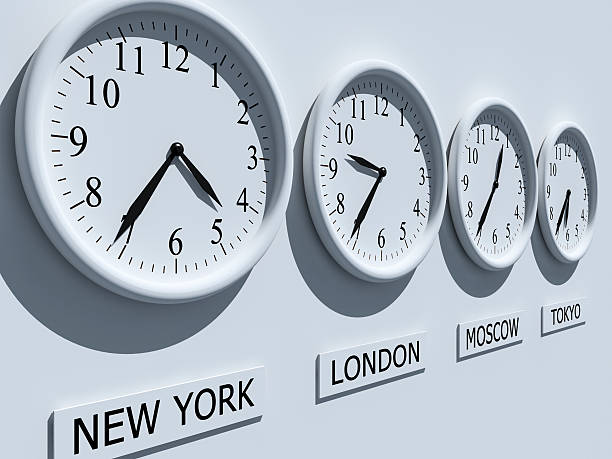
Impact on India
India follows Indian Standard Time (IST), which is GMT +5:30. The UK’s switch doesn’t apply in India, but it does affect interactions between India and the UK. Here’s how:
- When the UK is under BST: BST = GMT +1 → so IST = BST + 4½ hours.
- Example: If it’s 12:00 noon BST in the UK, it’s 16:30 (4:30 PM) in India.
- After the switch, when the UK is on GMT: UK time = GMT → so IST = GMT +5½ hours.
- Example: If it’s 12:00 noon GMT in the UK, it’s 17:30 (5:30 PM) in India.
- Business effect in India: Suppose an Indian firm schedules a call with a UK client at 10:00 UK time while BST is in force, that call happens at 14:30 IST. Once the UK switches to GMT, a 10:00 UK-time call will now be at 15:30 IST. So, the India-side time moves one hour later.
- Travel/family-effect: If someone in India regularly calls family or friends in the UK for an evening chat, they must keep in mind the shift. A call which was at, say, 20:00 IST may need to be moved to 21:00 IST after the UK clocks go back. If not adjusted, one might miss the intended time.
- Student/example scenario: A student in India attends a Zoom meeting scheduled for 20:00 IST while the UK is under BST. After the UK moves to GMT, the same UK-time meeting will fall at 21:00 IST (if not relabelled). If the student doesn’t update their calendar, they may miss it.
Global Perspective: Effects Around the World
The UK’s switch affects not only India, but anyone in a different time zone who is connected to the UK via business, travel or communication. Some examples:
- Example 1 – USA (Eastern Time, ET): When the UK is on BST (GMT+1) and the USA’s ET is say GMT-4 (during daylight), the time difference is one value; once the UK moves to GMT, that difference shifts by one hour. Meetings or schedules involving the UK–USA must be revised accordingly.
- Example 2 – Australia (Sydney time, AEST): Sydney is GMT+10 (or +11 in their daylight-saving time). When UK time changes, the hour gap between Sydney and the UK also shifts, impacting travel plans, webinars, online classes, etc.
- Example 3 – Middle East / UAE: UAE runs at GMT+4. When the UK shifts to GMT, the UK-UAE difference changes. For companies, bank transfers or calls across these zones, awareness is crucial.
- Business impact: For a global company with a UK office and other regional branches, this one-hour shift can affect meeting slots, deadlines, and system updates that are timed to “UK business hours”. If overlooked, it may cause confusion or missed deadlines.
- Travel effect: If you’re travelling to the UK or from the UK, your home country’s time zone relative to the UK will change. Flights, check-in times, connecting calls, etc., need adjustment. The “time difference” you assumed may no longer hold after the switch.
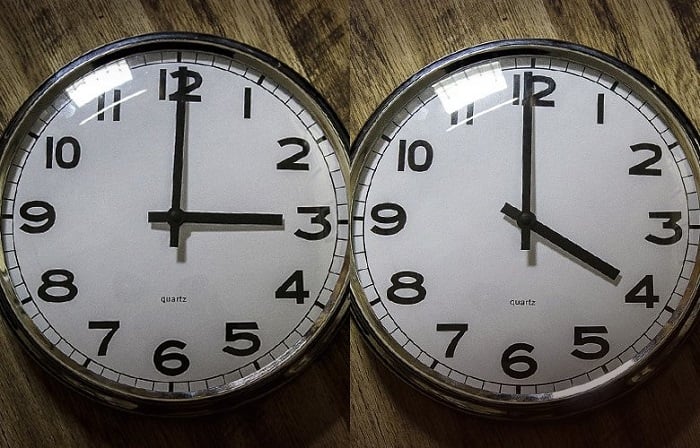
Final Takeaways & Tips
- If your personal or professional world includes the UK, mark the daylight-saving end date on your calendar and adjust your schedules accordingly.
- When scheduling calls from India with UK contacts, always specify “UK time (BST/GMT)” so everyone is on the same page.
- For travellers or cross-border planners: check both your local time zone and UK time zone before locking in appointments or bookings.
- Use digital tools which auto-adjust time zones (Google Calendar, Outlook, scheduling apps) so you don’t manually mis-calculate.
- Remind your friends/family/colleagues that the UK time has changed, for example, an evening call might shift by one hour.
Source: News Agencies

