
By: The Trek News Desk
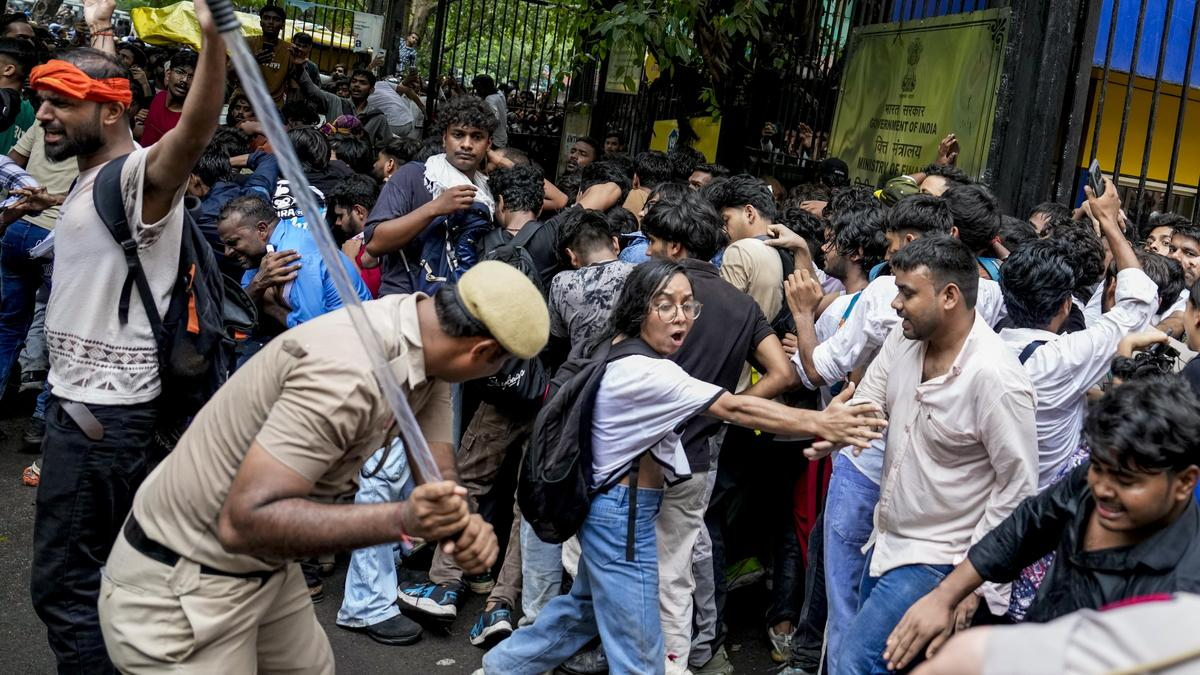
The ongoing unrest at Jawaharlal Nehru University (JNU) took a serious turn on Sunday as the Delhi Police filed an FIR against six students, including three senior office bearers of the JNU Students’ Union (JNUSU). The move came following a scuffle outside the Vasant Kunj North Police Station, where a group of protesting students allegedly clashed with law enforcement, resulting in injuries on both sides.
According to Delhi Police, the FIR has been lodged under multiple sections of the Bharatiya Nyaya Sanhita (BNS), specifically Sections 221, 121(2), 132, and 3(5). The students are accused of forcibly breaking police barricades, engaging in physical altercations with on-duty officers, and using abusive language during the confrontation.
Among those named in the FIR are JNUSU President Nitesh Kumar (26), Vice President Manisha (28), and General Secretary Munteha Fatima (28). The police have stated that all six accused students have been legally “bound down,” a preventive measure restricting their actions, while other detained students were held under Section 65 of the Delhi Police Act and will be handed over to university authorities after medical examinations.
Background: A Campus in Conflict
The altercation comes amid mounting tensions on the JNU campus that began last week. On Thursday, a general body meeting at the School of Social Sciences erupted into chaos after Left-affiliated student groups accused members of the right-wing Akhil Bharatiya Vidyarthi Parishad (ABVP) of disrupting proceedings and engaging in hooliganism. The ABVP denied the charges and instead alleged that they were targeted with “regional bias” and physical aggression.
In the following days, posters promoting a “Social March for Social Justice” flooded the campus. The protest spearheaded by Left-aligned groups under the hashtag #SOSJNU aimed to demand action from the Vasant Kunj North police station against ABVP members allegedly involved in Thursday’s incident. Students claimed that despite repeated complaints, the police had taken no action.
Police vs Protesters: Clashing Narratives
The police, in response, said they had been in “regular contact” with student representatives and had assured them of due legal procedure. However, they claimed that the JNUSU refused to call off the planned protest at the police station.
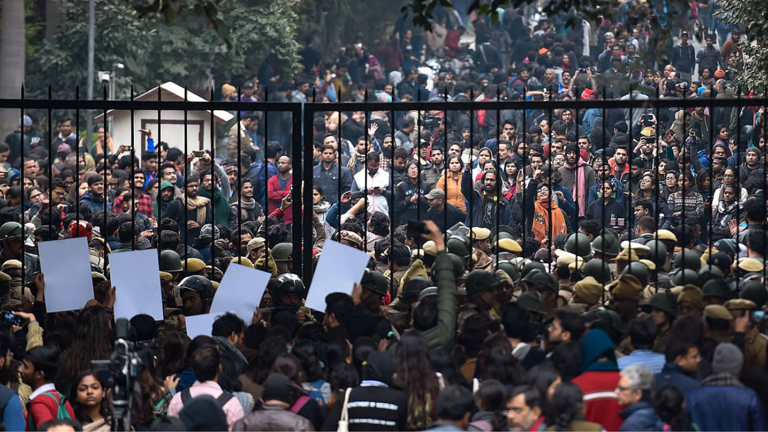
On Saturday, around 6 PM, approximately 70 to 80 students, including several women, gathered at JNU’s West Gate and attempted to march toward Nelson Mandela Marg. Police had set up barricades to stop them, but tensions flared when students allegedly tried to break through.
A senior police official stated, “Protesters not only crossed the barricades but also manhandled officers and used abusive language. Some personnel were injured in the chaos.”
Students Allege Police Brutality
Left student organisations have strongly condemned the police’s actions, accusing them of excessive force against peaceful demonstrators. A JNUSU representative told the media, “The police brutally assaulted students who were peacefully demanding justice. Ironically, the very students who filed complaints were the ones detained and assaulted.”
They further alleged that ABVP members hurled casteist, Islamophobic, and misogynistic slurs during the earlier clash on campus, while police allegedly stood by without intervening.
Campus Tensions at Boiling Point
The incident has further inflamed already tense campus politics, with both ideological camps blaming each other for the growing unrest. While student leaders insist, they will continue their “fight for justice,” Delhi Police has promised a full investigation into the matter.
University officials have not yet issued an official statement, but sources within the administration have hinted at heightened security measures and possible disciplinary reviews in the coming days.
This latest confrontation highlights the fragile balance between student activism and state authority, a dynamic that has repeatedly played out at JNU, one of India’s most politically active campuses.
Source: News Agencies