
By: The Trek News Desk
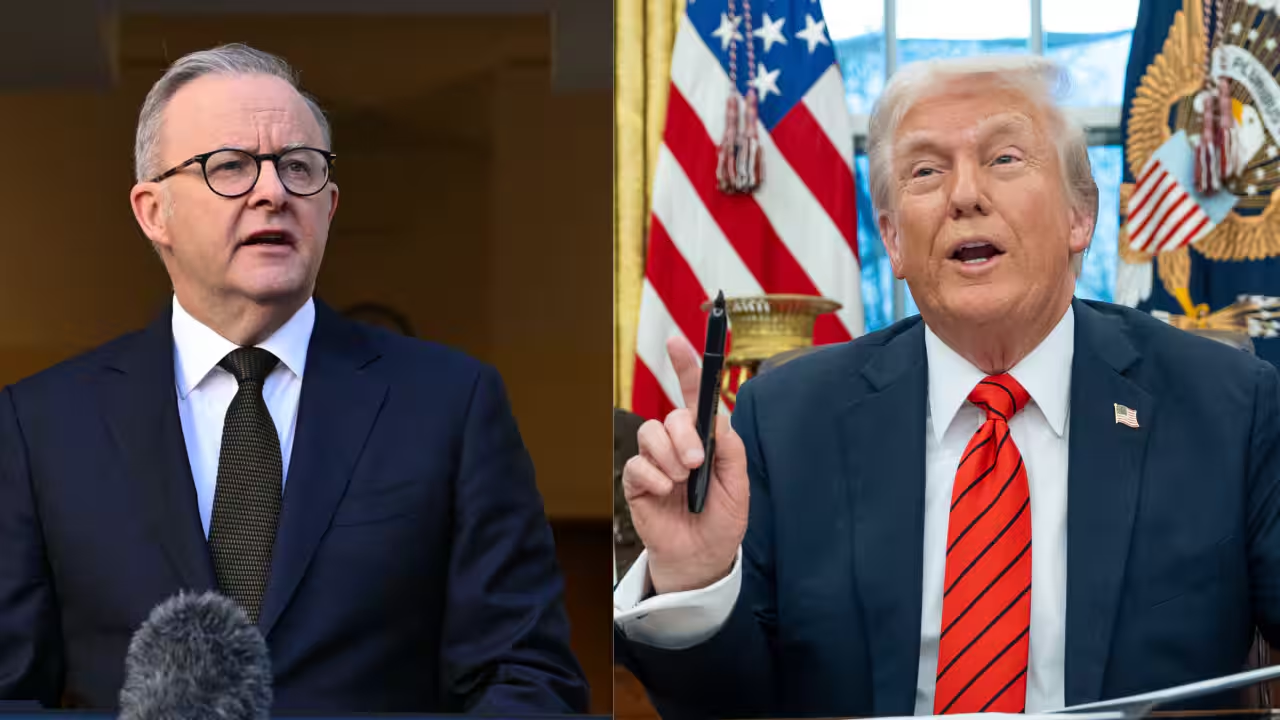
In a significant move to reduce global dependence on China for rare earth elements and critical minerals, United States President Donald Trump and Australian Prime Minister Anthony Albanese signed a strategic agreement on Monday at the White House. The deal is being seen as a strong counter to China’s growing control over the global supply of essential materials used in everything from electric vehicles to advanced defence systems.
President Trump stated that the agreement had been in the works for the past four to five months, and added that both leaders would also hold talks on trade, nuclear submarines, and military hardware in the days ahead.
Calling it an “$8.5 billion pipeline ready to launch,” Prime Minister Albanese highlighted the scale of projects that are set to be activated under the deal. Both nations have committed to investing $1 billion each over the next six months in mining and processing operations. The agreement also includes the implementation of a minimum price floor for critical minerals a long-standing demand from Western mining industries.
China Holds the Largest Rare Earth Reserves, But Australia Isn’t Far Behind
As per the U.S. Geological Survey, China currently controls the largest known reserves of rare earth minerals. However, Australia also holds significant deposits and is aiming to strengthen its position in the global supply chain. This new bilateral agreement is designed to secure mineral supply lines and ensure both countries are less vulnerable to geopolitical shifts in Asia.
Submarine Cooperation and Defence Upgrades on Track
Beyond critical minerals, the Trump-Albanese meeting also focused on a previously agreed defence partnership. As part of a $239.4 billion deal struck in 2023, Australia will begin purchasing U.S.-made nuclear-powered submarines by 2032. The long-term plan involves jointly developing a new class of submarines in collaboration with the United Kingdom.
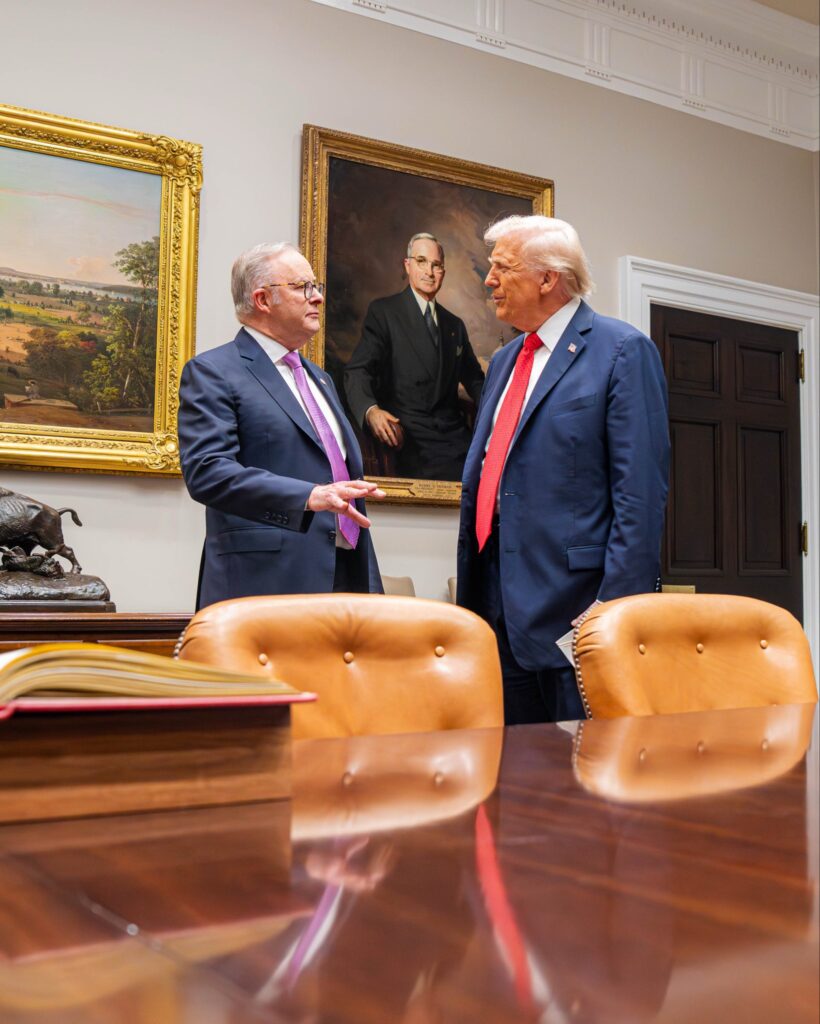
U.S. Navy Secretary John Phelan noted that both nations are actively working to fine-tune the original framework, resolving ambiguities that were left unresolved in the prior agreement. President Trump, however, brushed off concerns, saying the final details were “minor” and that both countries were “full steam ahead” on implementation.
China’s Export Controls Disrupt Global Mineral Supply Chains
The urgency behind the deal stems from China’s recent tightening of export controls on rare earth materials, a move that has rattled global markets. Top U.S. officials last week criticized Beijing’s actions, calling them a direct threat to international supply chains.
In response, Australia has put forward a plan to offer preferential access to its strategic mineral reserves to close allies like the United Kingdom. The country is also exploring the option to sell stakes in these reserves, positioning itself as a leading alternative supplier in the international rare earth market.
Strengthening AUKUS and Forward Military Presence
Alongside the mineral pact, Australia continues to bolster its commitment to the AUKUS defence alliance, a trilateral partnership with the U.S. and the U.K. Under this initiative, Canberra is investing $2 billion into U.S. submarine shipyards this year and preparing to host Virginia-class U.S. submarines at its Indian Ocean naval base starting in 2027.
Despite a 10-month delay in a formal Trump-Albanese summit since the start of Trump’s current term, Australian defence officials remain confident about the strategic direction. Defence Minister Richard Marles recently confirmed the timeline for a review of the defence partnership, suggesting strong continuity in bilateral defence plans.
Strategic Minerals as the New Battleground
This U.S.-Australia agreement represents more than just economic cooperation; it marks a turning point in the global contest for control over critical minerals. As tensions with China continue to rise, this deal sends a clear message: Western allies are prepared to take assertive steps to safeguard their supply chains and reduce reliance on Beijing.
By combining military collaboration with economic strategy, Washington and Canberra are reshaping their partnership to meet the challenges of a shifting global order, one where access to rare earths may soon prove as crucial as access to oil once was.
Source: News Agencies