
By: The Trek News Desk
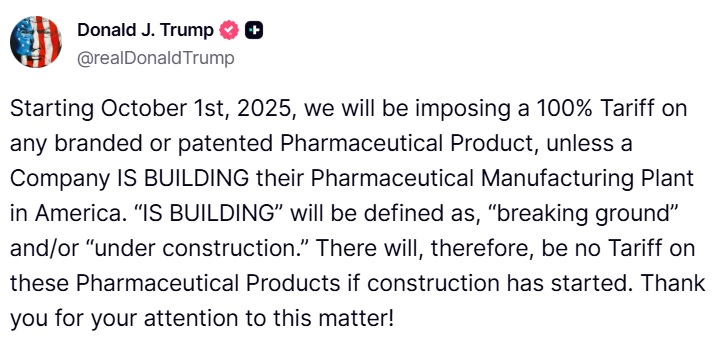
President Donald Trump announced a fresh round of tariffs on Thursday, targeting a wide range of imported goods. The new duties include a 100% tariff on branded pharmaceuticals, a 25% tariff on heavy trucks, and a 50% tariff on kitchen cabinets and bathroom vanities. These tariffs will take effect on October 1, 2025.
Trump announced on his social media platform, Truth Social, stating that the purpose of these new tariffs is to curb the “flooding” of such products into the U.S. market. This move is part of a broader strategy by the Trump administration to impose higher tariffs on a variety of imported goods, continuing a policy that has been prominent during his second term.
These measures are creating ripples across the global economic landscape, complicating trade decisions and raising concerns over potential market disruptions.
Impact of the New Tariffs
The 100% tariff will apply to branded and patented pharmaceuticals that are not manufactured within the United States. Trump specified that companies that have already begun construction on U.S.-based manufacturing plants would be exempt from this tariff.
The American pharmaceutical industry has expressed concern, warning that the new tariffs could undermine billions of dollars in planned investments.
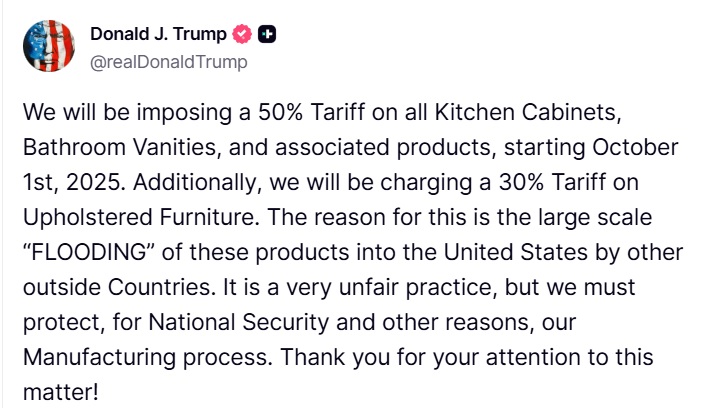
Additionally, Trump has imposed a 25% tariff on heavy trucks and a 30% tariff on upholstered furniture, a decision driven by concerns over excessive imports into the U.S. market. These tariffs aim to boost U.S. manufacturing in sectors that have struggled in recent years. Notably, the furniture industry, which has seen a decline in U.S.-based production, may benefit from these measures as a way to revive domestic manufacturing.
Trade and National Security Concerns
The Trump administration has justified these tariffs as necessary for national security, a rationale that has been central to many of its trade policies. However, the U.S. Chamber of Commerce and several global trade partners have raised alarms. Mexico, the largest exporter of heavy trucks to the U.S., has criticized the tariffs, arguing that many of these trucks contain a significant number of American-made components.
Several economists and analysts have also pointed out that these new tariffs could negatively impact the U.S. economy, especially in light of Trump’s earlier promises to reduce inflation. The higher tariffs on commercial vehicles could put pressure on transportation costs, which, in turn, could lead to rising prices for consumer goods, particularly food items.
Global Trade Implications
Trump’s use of tariffs as a foreign policy tool has been widely recognized, with the administration aiming to renegotiate trade agreements, extract concessions from foreign nations, and exert political leverage. U.S. Treasury Secretary Scott Bessent noted that the new tariffs could generate up to $300 billion in revenue by the end of the year, more than three times the revenue from tariffs in previous years.
However, under Trump’s new trade agreements with the European Union, Japan, and the United Kingdom, there are established tariff limits on certain products, which means that the new tariffs might not affect these countries as significantly. These agreements provide some protection against the broader impact of the new measures.
What’s Next?
These new tariffs represent a significant turning point in U.S. trade policy. If other countries respond with countermeasures, it could escalate into a full-fledged trade war, further disrupting global supply chains that have already been strained in recent years.
Economists suggest that U.S. manufacturers might benefit in the short term, but tensions with global trade partners could rise, complicating international relations.
Looking ahead, Trump’s promise to bring more manufacturing back to the U.S. may be realized through these tariffs, but the long-term effects of these policies remain uncertain. As the U.S. economy continues to face challenges, it will be crucial for the Trump administration to assess the impact of these tariffs on everyday American consumers, particularly regarding essential goods such as medicines, furniture, and heavy vehicles.
Source: News Agencies