

By: The Trek News Desk
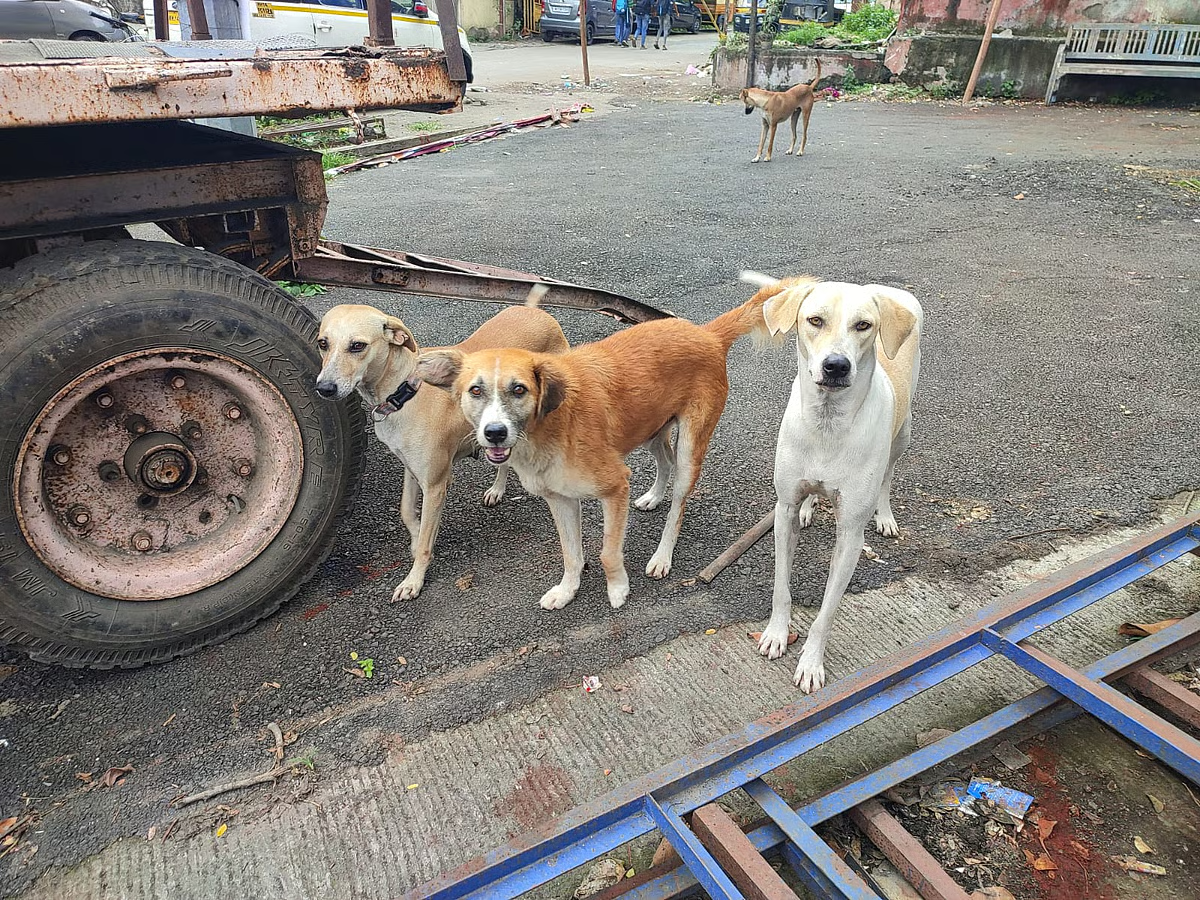
In a landmark move to address the growing issue of stray dogs in public areas, the Supreme Court of India on Friday directed all state governments and Union Territories to immediately remove stray dogs from public institutions and relocate them to designated animal shelters. The order covers educational campuses, hospitals, sports complexes, bus stations, depots, and railway stations.
A three-judge bench comprising Justices Vikram Nath, Sandeep Mehta, and N. V. Anjaria clarified that the dogs once removed must not be released back into the same locations. The bench noted that allowing them to return would “defeat the very purpose” of keeping such areas free from the risks associated with stray dog presence.
Key Highlights of the Order
The apex court has placed the responsibility squarely on municipal corporations and local authorities to ensure the removal, sterilisation, and vaccination of stray dogs before transferring them to shelters in compliance with the Animal Birth Control (ABC) Rules, 2023.
The bench further instructed that within two weeks, all state and UT administrations must identify every school, college, hospital, sports ground, bus terminal, and railway station within their jurisdiction. These premises must then be secured with proper fencing, walls, and gates to prevent stray dogs from entering or inhabiting the areas.
Nodal Officers to Be Appointed in Every Institution
Each educational institution, hospital, and public facility has been ordered to appoint a nodal officer responsible for maintaining cleanliness and ensuring that stray dogs are not found within the premises. The officer’s contact details must be clearly displayed at the main entrance and reported to the concerned municipal body.
Local bodies and Panchayats have also been instructed to conduct inspections at least once every three months to confirm compliance. The court cautioned that any negligence or failure to follow these directives would be viewed seriously.
Stray Animals on Highways Under Scrutiny
The Supreme Court extended its order beyond dogs, directing all states, UTs, and the National Highways Authority of India (NHAI) to take immediate measures to identify and remove stray cattle and other animals frequently found on highways and expressways. These animals are to be moved to designated shelters, Gaushalas, or cattle pounds, where they can be provided with food, water, and veterinary care.
The order also requires the formation of joint highway patrol teams that will operate 24/7 to monitor highways and respond swiftly to reports of stray animals obstructing traffic. These patrols will coordinate with local police stations, veterinary officers, and municipal authorities for prompt action.
Helpline Numbers to Be Displayed on Highways
The court mandated that helpline numbers be prominently displayed along all national and state highways at regular intervals. These helplines will allow citizens to immediately report the presence of stray animals or any road mishaps caused by them. The numbers will be connected to local police control rooms, NHAI units, and district administrations for real-time response and monitoring.
Accountability and Compliance Within Eight Weeks
The Supreme Court directed all Chief Secretaries, the NHAI Chairperson, and the Ministry of Road Transport and Highways to ensure strict enforcement of the ruling. The court warned that officers would be held personally accountable for repeated violations or negligence in their respective jurisdictions.
Every state and UT must submit a compliance report within eight weeks, detailing the measures taken for removal, sheltering, patrol operations, and the functioning of helpline services.
Uniform Implementation Across India
The Supreme Court emphasised that the directives must be implemented uniformly across the nation, ensuring cleaner, safer, and animal-friendly public spaces. The bench made it clear that any delay or laxity in compliance would not be tolerated.
This ruling marks a crucial step toward balancing public safety and animal welfare. While the decision prioritises secure and hygienic public environments, it also reinforces the humane treatment of stray animals under existing animal protection laws.
As authorities begin to act on the court’s directions, the focus now shifts to how effectively state governments and municipal bodies will execute this nationwide initiative.
Source: News Agencies