

By: The Trek News Desk
China launched an uncrewed Shenzhou-22 spacecraft on Tuesday in an urgent mission to provide a safe return option for three astronauts stationed aboard the Tiangong space station. The move comes after the station’s existing return capsule was damaged, leaving it unsafe for human re-entry.
Long March-2F Successfully Lifts Off
State broadcaster CCTV broadcast live footage showing the Long March-2F rocket blasting off from the Jiuquan Satellite Launch Centre shortly after midday.
The Shenzhou-22 mission was initially scheduled for 2026 with a full crew, but the emergency forced China to advance the launch by nearly two years.
Shenzhou-20 Damaged by Debris, Routine Crew Rotation Disrupted
Reports indicate that Shenzhou-20, currently docked to Tiangong, sustained damage from space debris, rendering it unfit to carry astronauts back to Earth.
This disruption forced the previous crew, who arrived in April for a six-month stay, to return early aboard Shenzhou-21.
With Shenzhou-20 compromised, the astronauts currently on Tiangong were left without a functional escape capsule, creating a potentially dangerous vulnerability aboard the permanently staffed station.
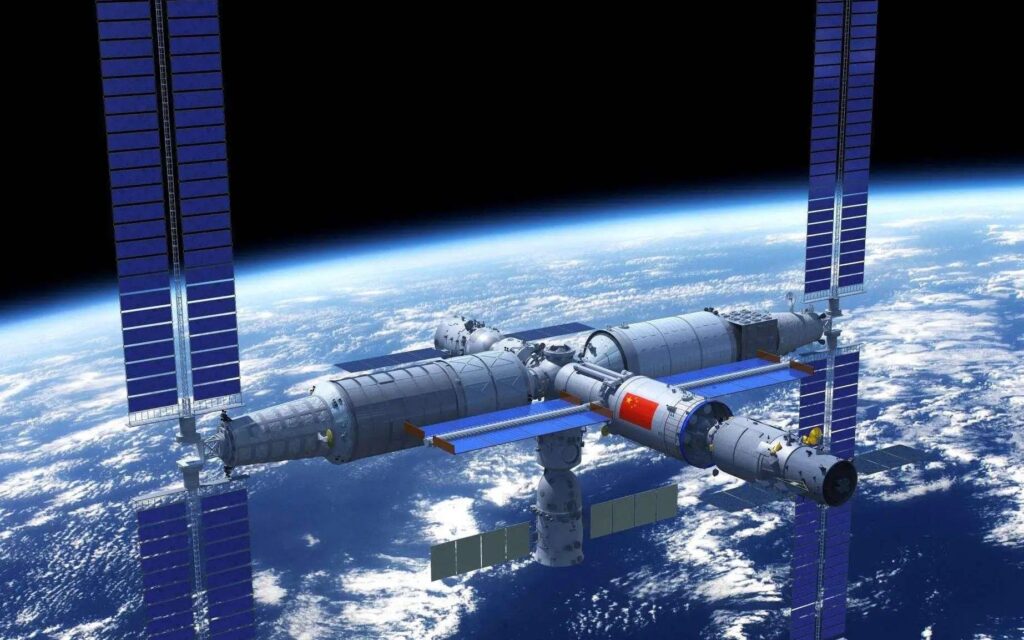
Shenzhou-22 to Serve as New ‘Safety Capsule’
The newly launched uncrewed Shenzhou-22 will dock with the Tiangong station and act as a backup return vehicle in case of emergency.
Chinese space authorities confirmed that the current crew, Zhang Lu, Wu Fei and Zhang Hongzhang, are continuing their work “normally and safely.”
A Rare Setback for China’s Expanding Space Ambitions
The incident marks an unusual obstacle for China’s rapidly accelerating space program. Beijing aims to send astronauts to the moon by 2030 and has invested billions of dollars in space technology over the past two decades.
China became the third nation to send humans into orbit, after the United States and the former Soviet Union, through its landmark missions.
Today, the country is pushing aggressively to match the capabilities of the US, Russia and Europe in human spaceflight and deep-space exploration.
Source: News Agencies