By: The Trek News Desk
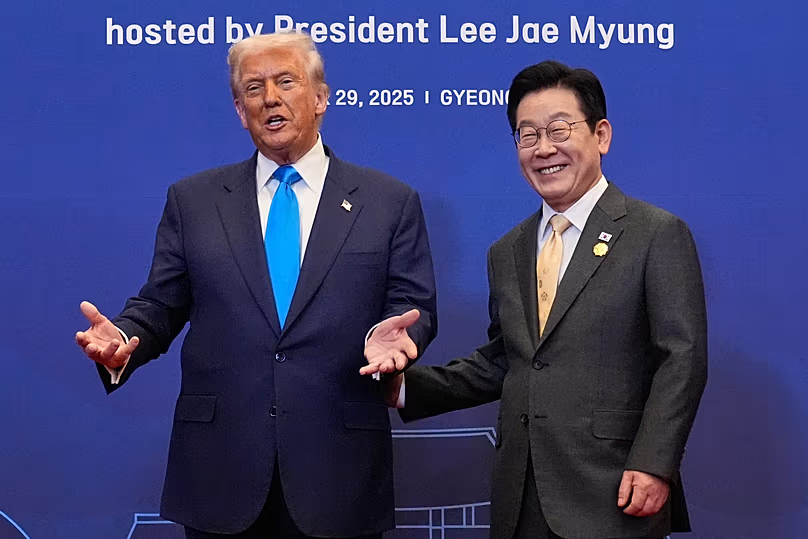
The United States has increased tariffs on imports from South Korea to 25%, with President Donald Trump accusing Seoul of failing to fully implement the commitments made under a trade agreement signed last year.
In a statement shared on social media, President Trump said the tariff rate has been raised from the earlier 15% to 25%. The higher duties will apply to a wide range of products, including automobiles, timber, pharmaceuticals, and other items covered under what he described as “reciprocal tariffs.” According to Trump, the US moved quickly to lower its own trade barriers under the agreement, while South Korea’s lawmakers have yet to formally approve the deal.
South Korea responded by saying it had not received any official notification from Washington regarding the tariff hike and called for immediate discussions to resolve the issue. The South Korean government also confirmed that Industry Minister Kim Jung-kwan, currently visiting Canada, is expected to travel to Washington soon to meet US Commerce Secretary Howard Lutnick.
The announcement initially unsettled financial markets in Seoul. South Korea’s benchmark Kospi index slipped in early trading on Tuesday but later recovered, closing around 1.8% higher as shares of major export-driven companies rebounded.
The tariff dispute comes despite a major trade agreement reached between the two countries in October last year. Under that deal, South Korea committed to investing around $350 billion in the United States, with a portion of the funds earmarked for the shipbuilding sector. In November, both sides agreed that the US would lower tariffs on certain goods once South Korea began the formal approval process for the agreement.
The deal was submitted to South Korea’s National Assembly on November 26 and is currently under review. Local media reports suggest it is likely to be approved by February.
The increased tariffs mean that US companies importing goods from South Korea will now have to pay a 25% tax, potentially raising costs for businesses and consumers alike.
During his second term in office, President Trump has frequently used tariffs as a tool to exert pressure in foreign policy matters. Recently, he warned Canada of imposing a 100% tariff if it pursued a trade agreement with China. Canadian Prime Minister Mark Carney later clarified that Canada is not seeking a free trade deal with China and has never considered such a move.
Earlier, Trump had also threatened import duties on eight countries, including the United Kingdom, over opposition to US proposals related to Greenland. Although he later withdrew the threat, citing progress toward a future agreement, the episode strained relations between the US, Denmark, and other NATO allies.
Source: News Agencies