

By: The Trek News Desk
The United States federal government has entered a partial shutdown following a breakdown in last-minute negotiations between Democrats and Republicans in the Senate. The shutdown took effect at 12:01 AM EDT on Wednesday after lawmakers failed to approve a temporary funding bill, leaving key federal agencies without the financial support needed to operate.
This marks the first major shutdown since 2018 and comes amid intensifying political clashes over healthcare, defence spending, and key government programs. President Donald Trump had earlier signalled that he may use the shutdown as an opportunity to cut federal workforce numbers and scale back programs favoured by Democrats, adding further strain to an already volatile political climate.
Services Disrupted, Federal Workers Furloughed
As the shutdown takes hold, thousands of government workers categorized under “non-essential” roles have been placed on unpaid leave. Critical services, including national security, military operations, and air traffic control, will continue, but those working in these areas will not receive salaries until the impasse is resolved.
Routine operations like the release of economic data and approval of small business loans have been suspended. Social Security and food assistance programs will remain active, although delays in administrative services may occur.
Trump’s Remarks Add Fuel to Political Fire
During a press briefing before the shutdown, President Trump made headlines by suggesting that the pause in government operations could be used to make irreversible changes that would disadvantage Democrats. He openly stated that he might target programs supported by the opposition and lay off a significant number of federal employees, specifically singling out those he believes to be politically aligned with Democrats.
These remarks have drawn sharp criticism, with former White House ethics lawyer Richard Painter labelling them as “strong-arm tactics” inconsistent with constitutional norms. Painter emphasized that while some reductions may be possible, many civil service positions are protected by law and cannot be terminated without congressional approval.
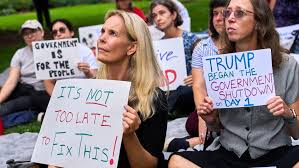
Senate Gridlock: Compromise Remains Elusive
Tuesday’s Senate session ended without a consensus, as both sides rejected each other’s stopgap funding proposals. The Republican-backed bill aimed to fund the government through November 21 but failed to reach the required 60-vote threshold, falling short at 55–45. Notably, two Democrats and an independent senator crossed party lines to support the measure, while one Republican voted against it.
Meanwhile, the Democratic proposal, which included expanded healthcare funding and reversed proposed Medicaid cuts, was also voted down, failing 47–53 with no Republican support.
The legislative stalemate has deepened the partisan divide, with both parties trading blame. Democrats accused Republicans of failing to address the healthcare crisis, while Republicans charged Democrats with catering to political interests over public welfare.
What Comes Next? Uncertain Road Ahead
Experts say predicting the outcome of this shutdown is difficult. According to Gerald Epstein, co-director of the Political Economy Research Institute at the University of Massachusetts Amherst, “It’s unlikely Democrats will back down any time soon.” The path forward may depend on public pressure and how long essential services can continue without disruption.
This marks the 15th federal government shutdown since 1980, and memories of the record-setting 34-day shutdown in 2018–2019 still linger in Washington’s political circles. That shutdown, which also occurred during Trump’s presidency, caused significant disruptions and economic losses.
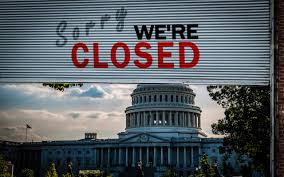
As the shutdown begins, the political deadlock raises fresh concerns about governance, accountability, and bipartisan cooperation in the United States. With critical public services under threat and federal employees left in limbo, the need for constructive dialogue has never been greater.
For now, millions of Americans wait anxiously as political leaders remain locked in gridlock, once again testing the resilience of the U.S. democratic system.
Source: News Agencies